
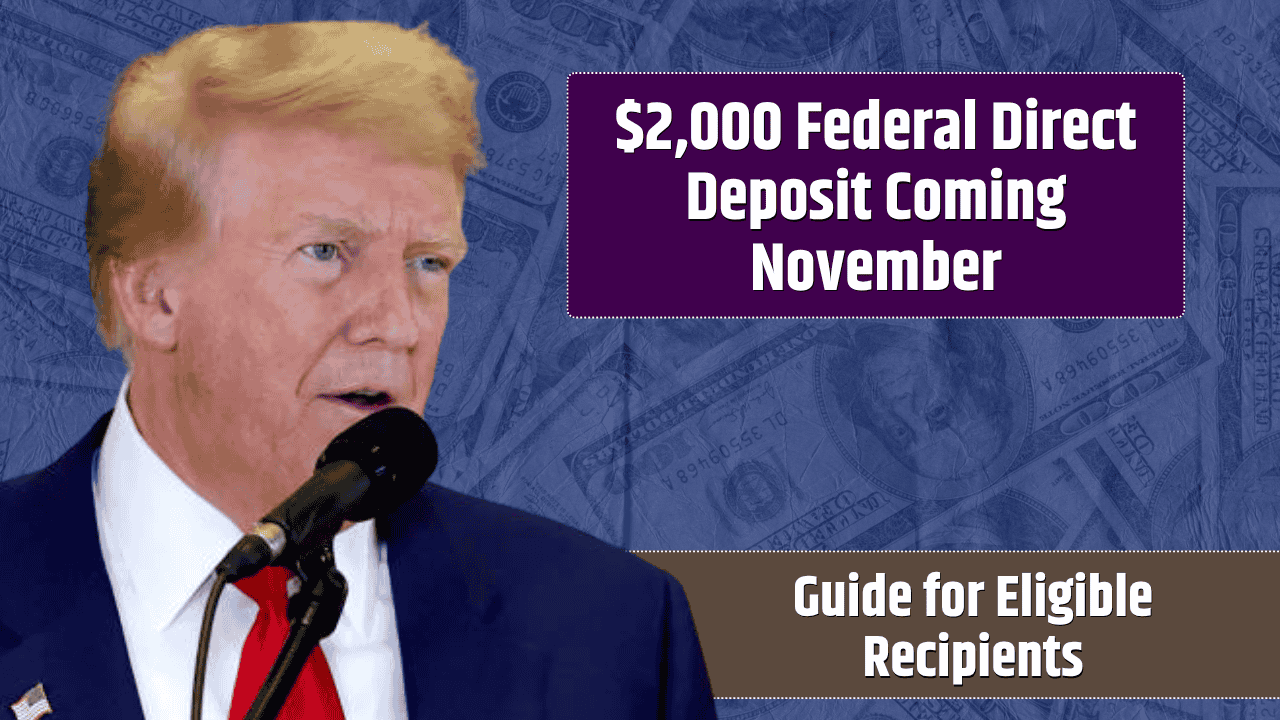
By mid-November 2025, a new flurry of deposits started quietly showing up in Americans’ bank accounts — $2,000 a pop. It’s not labeled as a stimulus check, but for millions of households, it sure feels like one. According to reports circulating online, the U.S. Treasury and Internal Revenue Service (IRS) are supposedly rolling out a one-time Federal Inflation Adjustment Initiative payment — a measure said to cushion Americans against lingering cost-of-living pressures.
But here’s the thing: the federal government hasn’t announced any such program. And if you’ve been scanning headlines or social media posts promising a “$2,000 inflation relief deposit,” it’s time to hit pause. Let’s separate fact from fiction.
What’s Actually Happening

There is no official IRS or Treasury announcement about a 2025 “Federal Inflation Adjustment Initiative” or new round of relief checks. As of early November 2025, neither IRS.gov nor the U.S. Department of the Treasury has issued press releases, budget documents, or federal notices authorizing any $2,000 disbursement program.
This story appears to have sprung from viral social media posts and misinterpreted commentary about broader inflation-relief proposals that circulated during 2024’s budget talks — ideas that never made it into law.
In short: there’s no active federal program issuing new stimulus-style payments this fall.
What the IRS Is Doing Right Now

The IRS is busy this season — but with tax refunds, backlogged processing, and outreach on Earned Income Tax Credit (EITC) and Child Tax Credit (CTC) eligibility. None of those involve automatic $2,000 payments.
In fact, the agency has publicly warned against scam emails and texts claiming to offer “relief deposits” or “early payments.” The official IRS statement reads:
“The IRS does not initiate contact with taxpayers by email, text, or social media regarding refunds, payments, or personal information. Always use official IRS.gov links.”

If you’ve received a message urging you to click a link, confirm your banking details, or “pre-register” for an inflation check — it’s a scam.
How Real Federal Relief Works
When the government actually issues financial relief — like the Economic Impact Payments (EIPs) of 2020 and 2021 — it’s backed by congressional legislation, announced publicly, and detailed on IRS.gov/coronavirus. You can track the entire rollout through official press releases and Treasury.gov updates.
Payments also appear on IRS transcripts as “Economic Impact Payment” or “Advance Recovery Rebate” — not as “Federal Inflation Adjustment Initiative.”
So far, no such listing or legislation exists for 2025.
Why These Rumors Keep Spreading
Online “stimulus check” rumors are like a bad penny — they just keep turning up. Each time inflation spikes or Congress debates economic relief, misinformation floods social media. This round borrows credibility from real inflation data and official-sounding names, but without any legislative trail or funding authority.
Scammers exploit these moments to harvest personal information or push fraudulent links. Some even mimic IRS letterhead or use phrases like “inflation rebate” to lure clicks. The best defense? Go directly to IRS.gov, not through third-party links or social posts.
Fact Check: The Claims vs. Reality
| Claim | Reality |
|---|---|
| $2,000 “Inflation Adjustment Initiative” payments started Nov. 15, 2025 | False. No such program exists in federal records or the 2025 budget. |
| Payments go automatically to taxpayers who filed 2024 returns | False. IRS has issued no announcement or distribution schedule. |
| “Get My Payment” portal updated for 2025 relief | False. The portal was deactivated after the last pandemic-era stimulus round. |
| Relief included in budget reconciliation package | Unverified/False. No mention of such a measure in official congressional summaries. |
| Claim payments through Recovery Rebate Credit if missed | False. That credit applied only to 2020–2021 EIPs. |
What to Do If You See These Posts
- Don’t click or share. Fraudulent links may lead to phishing sites.
- Check IRS.gov/newsroom for official updates.
- Report scams to the Treasury Inspector General for Tax Administration (TIGTA).
- Update your IRS account securely. If you’ve changed banks, do it only through your verified IRS online account.
The only legitimate government disbursements happening right now are tax refunds, federal benefits (like Social Security), and certain state-level rebates. Anything else is likely misinformation.
The Broader Context: Inflation & Relief Politics
The buzz about relief checks isn’t coming from nowhere. Inflation, though down from its 2022 peaks, still bites — food, rent, and healthcare costs remain high. Some lawmakers have floated targeted assistance proposals, but these are still just ideas, not enacted policies.
Economists note that blanket cash infusions could reignite price pressures — a risk the Federal Reserve wants to avoid while it cautiously cuts rates in 2026. That makes another round of stimulus checks politically and economically unlikely in the short term.
FAQs
Are any federal stimulus checks coming in 2025?
No. As of November 2025, there are no new federal relief programs or stimulus payments authorized by Congress.
I saw $2,000 listed in my bank account — could it still be from the IRS?
Unlikely. Verify the source code of the deposit. Official IRS payments list “IRS TREAS 310” followed by “TAX REF” or “EIP.” If the label differs, contact your bank.
Can I claim a missed payment on my tax return?
Only legitimate federal payments (EIPs, refunds, tax credits) are eligible. There’s no “Inflation Adjustment” credit.
How can I avoid scams?
The IRS will never text, email, or message you for payment info. Always verify through official domains ending in .gov.
Are states offering any inflation relief?
Some states — like California, Colorado, and Minnesota — have introduced limited tax rebates or energy credits. Check your state’s Department of Revenue site for updates.