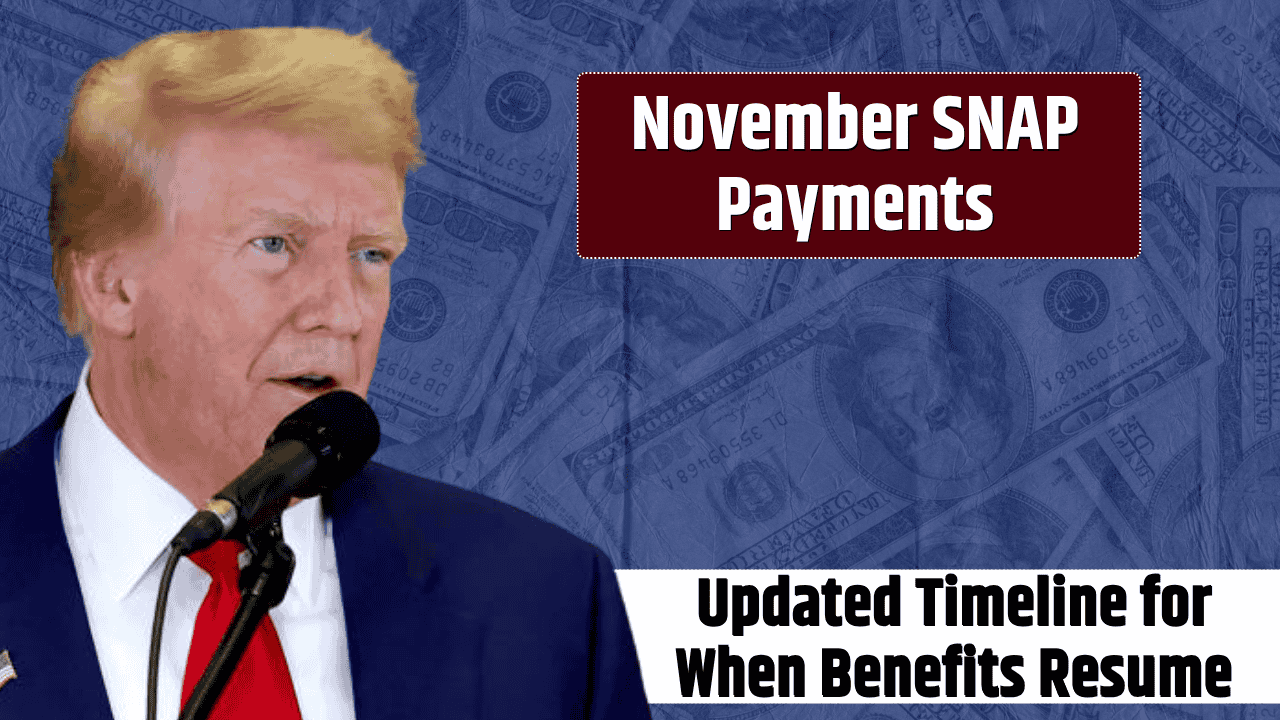
The scene in Washington finally shifted this week, as the longest government shutdown in U.S. history came to an end. President Donald Trump signed a bipartisan funding bill passed by both chambers of Congress, reopening the federal government after weeks of paralysis that had left tens of millions of Americans in limbo—especially those relying on food assistance through the Supplemental Nutrition Assistance Program (SNAP).
Yet, even as the federal lights flickered back on, the damage to the nation’s largest anti-hunger program remains tangled in legal and bureaucratic knots.
SNAP Payments Resume, but Chaos Still Looms
SNAP—often called food stamps—feeds over 42 million Americans every month. Benefits are distributed through Electronic Benefit Transfer (EBT) cards, which work like debit cards at grocery stores and authorized retailers. Normally, states distribute payments on a fixed monthly schedule. But the shutdown froze that process, leaving many families waiting weeks without access to basic food aid.
Funding for SNAP had technically expired on October 1, when regular appropriations ran out. The Trump administration initially cited legal limits on contingency funding, effectively freezing payments nationwide. After an uproar, the U.S. Department of Agriculture (USDA) announced temporary partial funding for November. That half-measure triggered a wave of lawsuits from advocacy groups and state officials demanding the full restoration of benefits.
A Rhode Island federal judge, John McConnell, ordered the administration to resume full payments. His ruling was upheld by a federal appeals court but temporarily paused by the U.S. Supreme Court, which is still reviewing the case.

Despite the uncertainty, several states—including Massachusetts, Hawaii, Oregon, Wisconsin, California, Kansas, New Jersey, New York, Pennsylvania, and Washington—began releasing overdue payments following court orders last weekend.
Others, however, held back. Conflicting federal guidance led to chaos: one day, the USDA instructed states to begin issuing full benefits; the next, it told them to “undo any steps taken” to do so. That reversal drew immediate backlash—and yet another court injunction blocking the directive on Monday.
Congress Steps In to End the Hunger Stalemate
When the Senate approved a comprehensive funding bill on Monday, it set the stage for a breakthrough. The House of Representatives, which had been in recess since mid-September, returned to pass the bill, clearing the way for President Trump’s signature late Wednesday.

The newly signed law restores SNAP funding through 2026, granting the USDA full authority to release payments to every state and U.S. territory. State agencies have already begun processing backlogged payments, and according to officials, most recipients should receive their benefits “within days.”
Still, the sense of relief is mixed with frustration. For weeks, food pantries reported record demand, and millions of low-income families were forced to rely on donations or credit cards to fill the gap.
“This wasn’t just a political standoff—it was a hunger crisis,” said Diane Yentel, president of the National Low Income Housing Coalition. “Families that live paycheck to paycheck were suddenly without food assistance. The government cannot play politics with survival.”
How the Shutdown Upended Food Assistance
The shutdown’s impact on SNAP exposed how deeply intertwined state and federal systems are. While the USDA funds SNAP, state and local agencies handle distribution, meaning payment timing varies widely. When the federal funding tap was turned off, each state had to decide whether to front the money, wait for new guidance, or prepare for court intervention.
The result was a patchwork of responses. In some states, benefits arrived days after the shutdown ended. In others, families are still waiting.
| State Response | Status as of Nov. 13, 2025 |
|---|---|
| Massachusetts, California, Oregon, Washington | Payments resumed per federal court order |
| Texas, Florida, Georgia | Awaiting USDA final directive |
| New York, New Jersey, Pennsylvania | Partial payments released |
| Midwest states (Iowa, Kansas, Wisconsin) | Disbursements in progress |
| Southern states (Alabama, Mississippi) | Still delayed, expected by weekend |
The USDA’s Food and Nutrition Service has said it’s “coordinating with states to ensure uninterrupted service,” though critics argue that coordination should’ve happened weeks earlier.
Legal Tug-of-War: What’s Still Unresolved
The legal fight over SNAP funding isn’t over. The Trump administration’s Supreme Court appeal remains active, challenging lower court rulings that require the government to issue full payments. The administration argues that using contingency funds for routine benefits violates appropriations law, while advocates insist that halting aid during a shutdown endangers lives.
For now, the lower court’s pro-benefit stance stands. But the Supreme Court’s pending decision could reshape how the executive branch manages mandatory programs during future shutdowns.
“If the Court sides with the administration,” said Georgetown law professor Ruth Colker, “it could set a precedent that allows presidents to weaponize funding pauses in essential programs.”
What SNAP Recipients Should Expect Next
As of this week, all states have been cleared to begin releasing November 2025 benefits. Most EBT cards should reflect deposits by mid-month. State agencies are urging recipients to check official websites or call customer service lines rather than relying on social media updates, which have been rife with misinformation.
The USDA has also promised that new funding will cover the remainder of the fiscal year, meaning there should be no interruption through September 2026—assuming Congress doesn’t trigger another shutdown.
For millions who endured weeks of uncertainty, that’s a small but welcome comfort.
FAQs
When will SNAP benefits resume after the government shutdown?
Most states began issuing delayed November benefits within days of the shutdown ending. Recipients should see payments on their EBT cards by mid-November.
Will all 42 million Americans receive back pay for missed SNAP benefits?
Yes. The USDA has been authorized to issue full benefits for November 2025 across all states and U.S. territories.
What if my state hasn’t released SNAP funds yet?
Contact your state’s SNAP hotline or check the USDA’s SNAP portal for updates. Some states are still processing delays due to conflicting federal guidance.
Is the Supreme Court still reviewing the SNAP funding case?
Yes. The Trump administration’s appeal remains pending, though current rulings require full benefit payments to continue.
Will SNAP funding now be stable?
Under the new law, funding is extended through September 2026, reducing the risk of another immediate disruption.